
Boron Facilities Management has maintained tier 3 certified data centre environments for financial services institutions, telecoms operators, and technology companies across South Africa since 2002. This is what we have learned, and what most facilities managers are getting wrong.
The Day the Cooling Tower Stopped: It was not a dramatic failure. No alarms. No smoke. The cooling tower fan bearing had been degrading for weeks, a slow, measurable deterioration that a thermal imaging scan would have caught months earlier. But the scan hadn’t been done on schedule. The bearing seized at 2am on a Tuesday.
By 3am, server inlet temperatures at the data centre were climbing. By 4am, the operations team had begun emergency load shedding, powering down non-critical systems to reduce heat load while the Boron team sourced a replacement bearing. By 6am, the issue was resolved. No data loss. No SLA breach. But four hours of elevated thermal stress on hardware that had been designed to run cool.
This is the economics of data centre maintenance. And after 20 years of maintaining mission-critical infrastructure across South Africa, and into Angola, Kenya, and beyond, it is the lesson we return to constantly.
Prevention is not a cost. It is the cheapest form of insurance available to any facilities manager.
Boron Facilities Management was founded in Cape Town in 2002.
We are registered with the Construction Industry Development Board as Grade 5EB PE (Electrical Services) and Grade 5ME PE (Mechanical Services). We are a Level 1 BBBEE company, registered with the ECA and SAFMA, and our team members hold certifications from ECSA, PMI, and EXIN.
Our Technical Director, Charles Selkirk, is an ECSA Professional Engineer and one of a very small number of practitioners in South Africa who hold Accredited Uptime Institute Tier Designer status. That credential means something specific: it means Boron has the technical authority to design, assess, and certify data centre infrastructure against the Uptime Institute’s tier classification system, the global standard for data centre reliability.
We have prepared four facilities for Uptime Institute audits, achieving Silver, Gold, and two Bronze ratings, a record that speaks to the quality of our maintenance programmes, not just our construction capability.
Our project portfolio includes work for Old Mutual, Metropolitan Life, Sanlam, T-Systems, ADC (formerly Neotel), BP Angola, Chevron Angola, Distell, Sasol, the City of Cape Town, and Zenprop Property Holdings, among many others. The total value of infrastructure we have designed, built, and maintained exceeds R1 billion.
We share these credentials not to impress. We share them because the facilities manager reading this deserves to know whether the people, they are trusting to maintain their critical infrastructure have actually done it before, at scale, under pressure, with international clients and Uptime Institute scrutiny. We have.
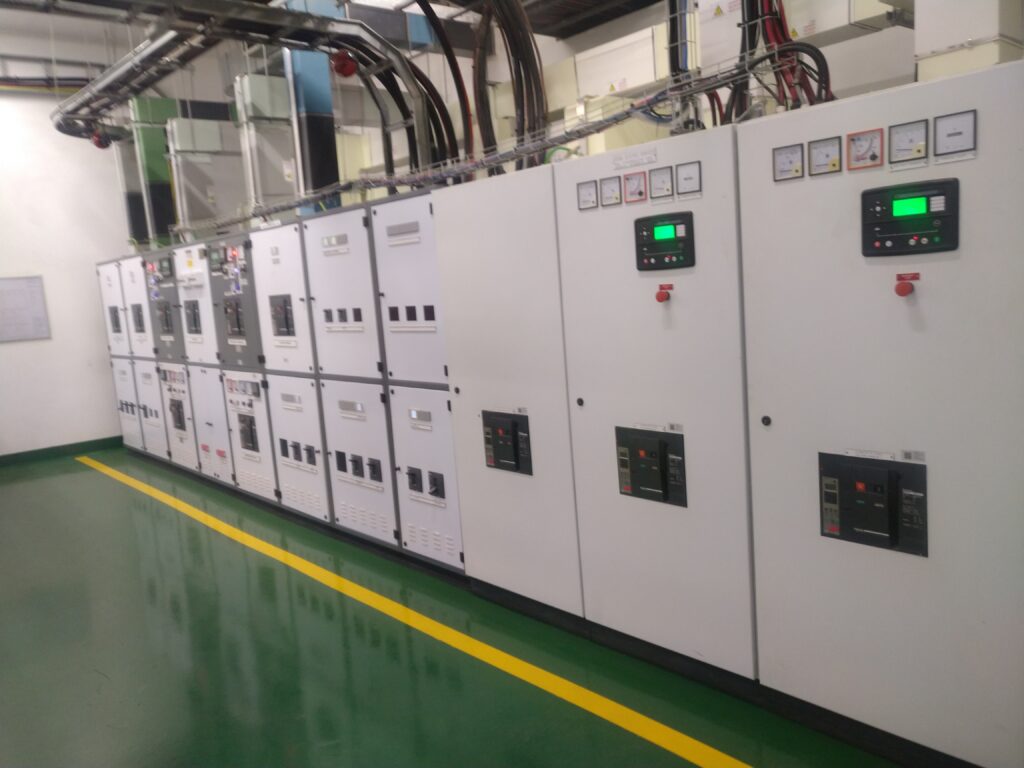
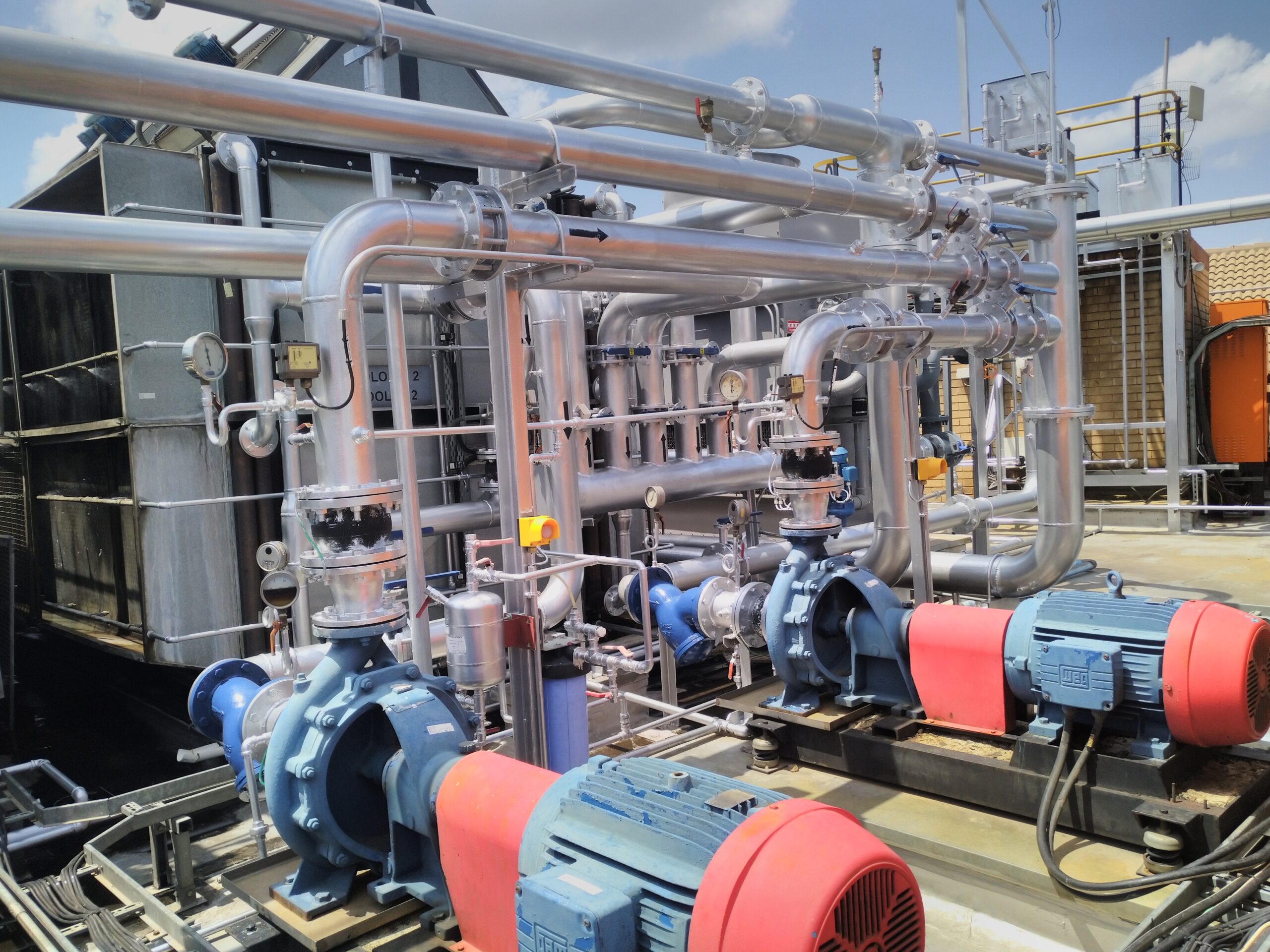
In 20 years of site assessments, emergency callouts, and long-term maintenance contracts, we have observed the same patterns of failure repeating across facilities large and small. These are not obscure edge cases. They are systematic gaps that exist because maintenance is easy to deprioritise when nothing is visibly wrong.
Battery resistance testing, measuring internal resistance under controlled conditions, tells a completely different story. A battery that appears healthy at rest may have internal resistance high enough to limit its real-world runtime to a fraction of its rated capacity. A bank rated for 60 minutes of protection may, in practice, deliver 18 minutes.
We test every battery bank we maintain under load. Not once a year. Every 90 days. Because the degradation curve is not linear, it accelerates as batteries age, and because 18 minutes is not long enough to execute a controlled shutdown of a Tier 3 data centre.
A battery rated for 60 minutes that delivers 18 is not a maintenance issue. It is an unmanaged existential risk to your SLA, your data, and your client relationships.
We have assessed facilities where the maintenance records showed quarterly generator servicing. On investigation, no load bank test had been conducted in three years. The generator would start. It would idle correctly. But when asked to carry 80% of the design load for four hours, it throttled back within 45 minutes due to fuel system issues that only manifest under sustained load.
That generator would have failed during an actual power outage. The maintenance records would have shown it as fully serviced.
At Boron, thermal imaging is standard on every electrical maintenance visit. We scan distribution boards, UPS systems, generator control panels, and cooling system electrical components. The cost of a thermal scan is a fraction of the cost of a distribution board fire or an unplanned power failure. Many of our competitors treat thermal imaging as an extra. We consider it a baseline.
We have assessed facilities where new server racks had been installed in locations that created hot spots, concentrations of heat that the existing cooling infrastructure was not positioned to address. The servers were running. The cooling systems were running. But the airflow patterns meant that certain rack positions were consistently 8–12 degrees warmer than others. At the edge of thermal specification, not over it, but steadily degrading the hardware it contained.
The fix was airflow management, blanking panels, containment adjustments, CRAC unit repositioning. Total cost: under R50,000. The alternative was accelerated hardware failure across affected racks.
Boron’s approach is to maintain Uptime Institute compliance as an ongoing operational standard, not as an audit target. Our maintenance programmes are structured around the tier requirements of each facility. Our documentation, visit reports, maintenance records, test results, is maintained in a format that supports a re-audit at any time.
Four of our clients have successfully undergone Uptime Institute audits with Boron’s maintenance records as part of their submission. All four achieved their target tier ratings.
We are frequently asked what our maintenance programmes include. The honest answer is: it depends entirely on the facility. We do not sell standard packages. We assess the facility, understand its tier requirements and operational context, and design a maintenance schedule that is specific to it.
That said, a typical managed services programme for a tier 3 data centre in our portfolio includes:
Boron offers a complimentary infrastructure assessment to qualifying facilities across South Africa. We want to be direct about why.
In 20 years, we have found that the facilities most in need of expert maintenance are often the ones most hesitant to engage a new service provider. The existing arrangement, however inadequate, feels safer than the unknown. The process of getting a quote from a new contractor feels like an administrative effort on top of an already demanding workload.
The free assessment removes those barriers. We come to you. We look at what you have. We tell you honestly what is good, what is at risk, and what we would recommend, in writing, with our findings documented. You pay nothing and are under no obligation.
What we bring to a site assessment:
At the end of the visit, you receive a written report. It contains our findings, photographs, instrument readings, and recommendations, including what we would prioritise if you asked us to proceed and an indicative cost for each recommendation.
If the report tells you your facility is well-maintained and there is nothing meaningful, we can add, we will tell you that too. We have done it before. Our long-term interest is in being trusted, and trust is built by being honest when honesty costs us the business.
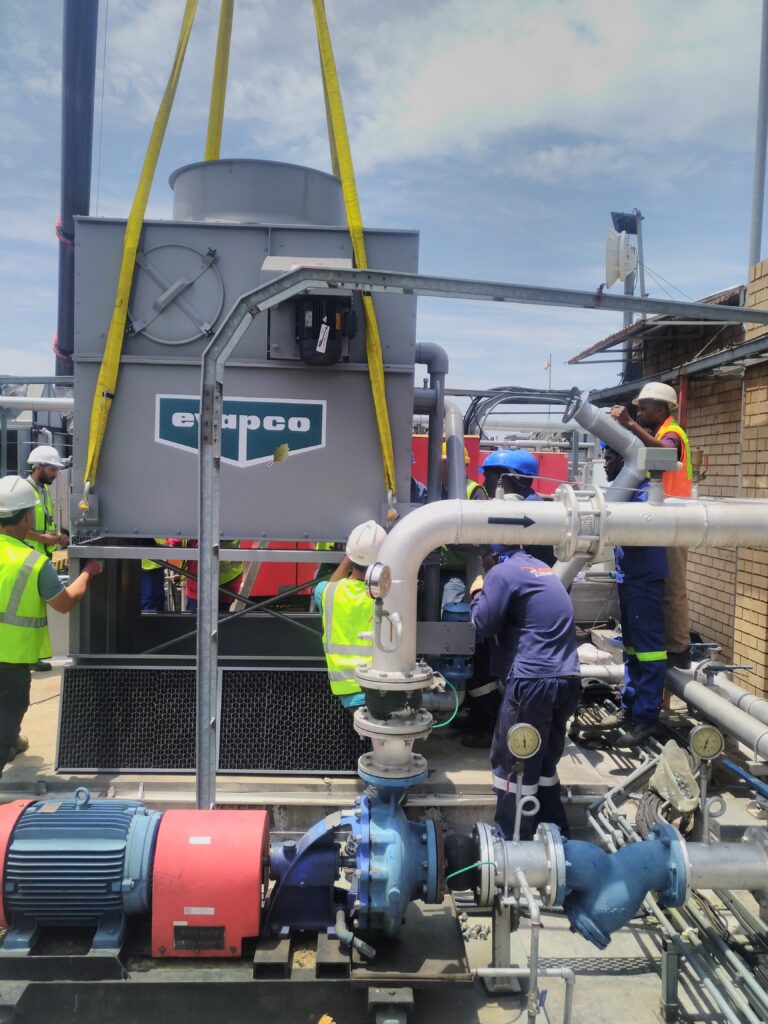
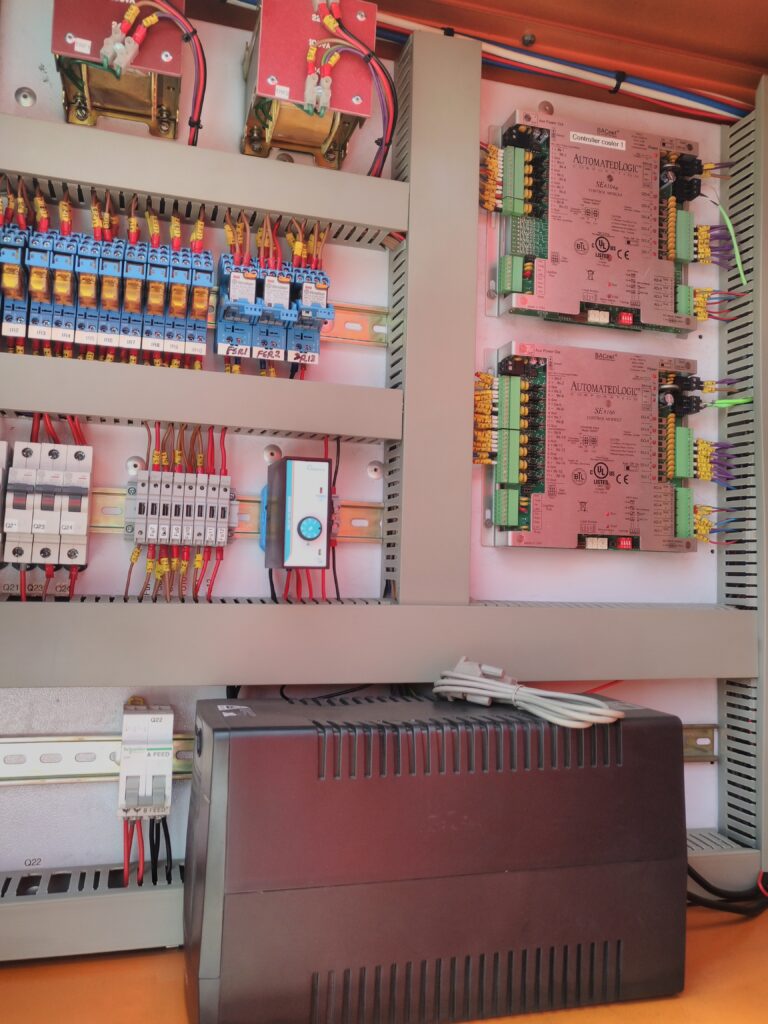
South Africa’s data centre sector is growing at a rate that has attracted global operators, Teraco, Africa Data Centres, Equinix, and Vantage. The demand for colocation space, cloud connectivity, and hyperscale infrastructure is real and accelerating.
Behind every new data centre is a maintenance requirement. The hardware changes. The software changes. The capacity expands. The cooling load increases. The electrical infrastructure ages. The batteries degrade.
What does not change is the physics. Electricity flows. Heat rises. Batteries discharge. Generators burn fuel. And without a disciplined, documented, expert maintenance programme, none of it performs the way it was designed to perform for as long as it was designed to perform it.
Boron has been in this sector since before most of South Africa’s current data centre operators existed. We have maintained infrastructure for the telecoms companies, financial services institutions, and government entities whose operations underpin the South African economy.
Request a Free Infrastructure Assessment: Boron Facilities Management offers complimentary site assessments for qualifying facilities across Johannesburg, Cape Town, Durban and Port Elizabeth. No cost. No obligation. A written report within 5 business days of your visit.
Book your free assessment: boron.co.za/facilities-assessment